

India

The Blind Spot: Western Media Coverage of the Pahalgam Attack
Western media's response to the Pahalgam attack reveals a troubling blind spot in terrorism coverage, when it comes to India.
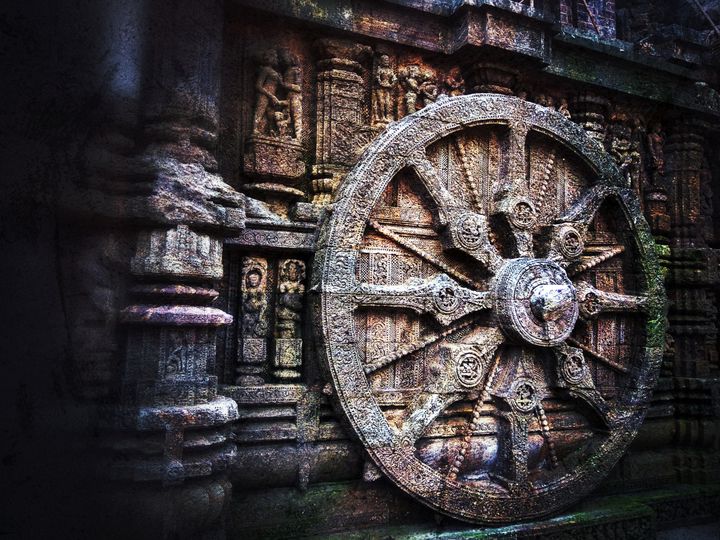
Sushruta and his Samhita - Part 10 - Wake up Bharatvarsha
At the outset, we made a few tall claims. We have already demonstrated how Hoernlé’s method of dating both Sushruta, as well as Sushruta Samhita, were incorrect. We have also put forth a tested and validated dating of Sushruta having existed before Mahabharat times, at least 5561 BCE and

Sushruta and his Samhita - Part 9 - Sushruta graced Bharat at least 5561 BCE!
In the previous post we demonstrated Hoernlés erroneous dating methodology. In this part we present a more plausible time period based on the following information:
Lunar months, corresponding seasons & timing of Sushruta Samhita
Sushruta Samhita states the following lunar months for the specific seasons of the year. If we
Sushruta & his Samhita - Part 8 - Hoernlés erroneous dating.
Rudolf Hoernlé began translating Bower Manuscript from Sanskrit to English, in late 1800 and completed in early 1900. He made an attempt to determine the timing of Sushruta Samhita and Sage Sushruta himself. He estimated the timing of Sushruta Samhita to be around 500 CE and the timing of Sage

Sushruta and his Samhita - Part 7 — Drumroll…Enter Sushruta!!
In the previous chapter, we read how Hoernle persevered for almost two decades and translated the Bower Manuscript. The original name of this scripture is “Naavnitakam”
Naavanitakam is a collation of two manuscripts, a larger and a smaller one. The larger manuscript was itself a compilation of six smaller manuscripts.

Sushruta & his Samhita - Part 6 - Hoernlé, the Persistent.
In the previous part, we learnt that Bower took the pothi to Simla and upon his return forwarded it to Colonel James Waterhouse, the then President of the Asiatic Society of Bengal. Since Hamilton Bower discovered it, the pothi came to be known as the Bower Manuscript.
Waterhouse exhibited the