
Stop Shouting. Start Documenting.
When ALDI listed a toilet mat under the name ShivaDarkForest, I wrote a formal complaint, made specific demands, and the product was removed. This is what advocacy looks like when outrage isn't enough.
What I Did When ALDI Named a Toilet Mat After Bhagwan Shiva
"Look at this!" Someone texted me the link to a product advertised on ALDI Australia website when I saw it. Again.
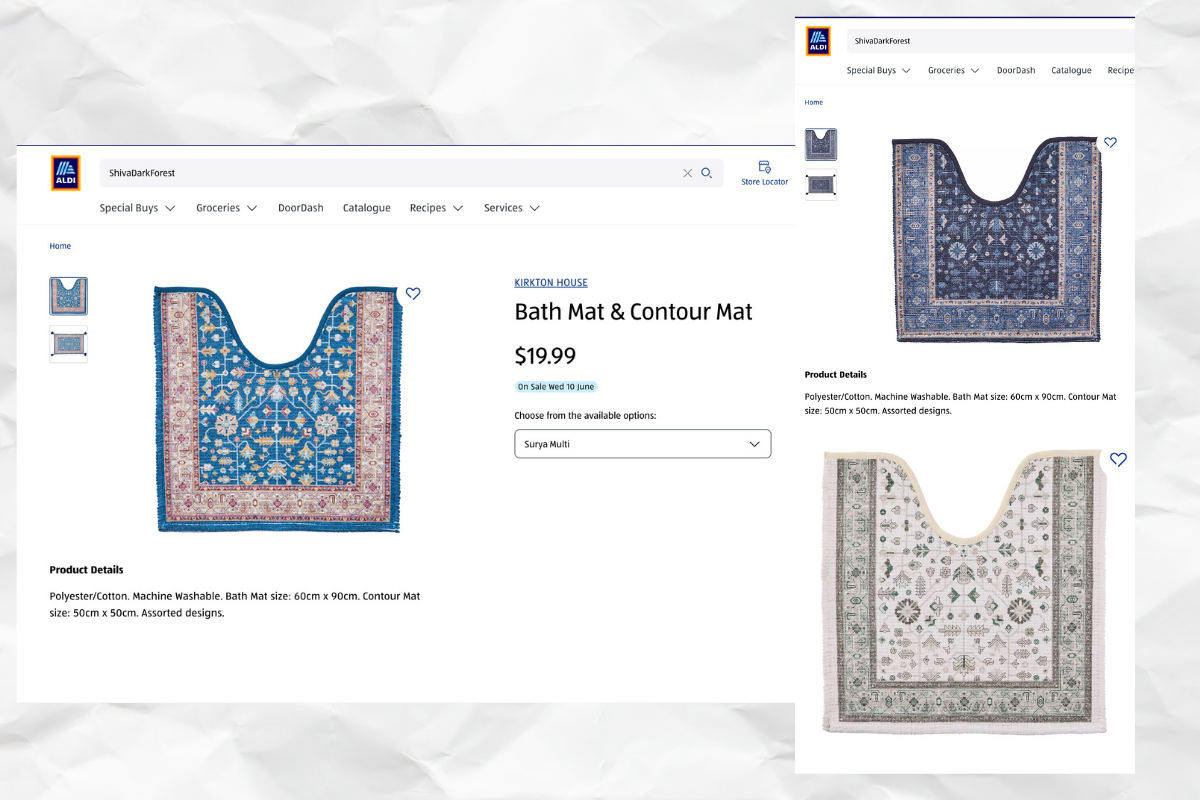
A bath mat and contour mat set, sold under their Kirkton House brand, going on sale from 10 June. The product variants in the dropdown: ShivaDarkForest. ShivaNightShadow. Surya Multi.
The contour mat, the U-shaped mat that sits around the base of a toilet, named after one of Hinduism's most revered deities.
My first feeling was neither surprise nor outrage.
I have been here before. Several times. Not metaphorically. Literally. I have written to business owners on previous occasions when I have found Hindu deity names or sacred imagery on inappropriate products. Some of those letters resulted in the products being removed. Some resulted in formal apologies. None of them resulted in the retailers never doing it again, because the retailers who received those letters were not ALDI, and the lesson did not transfer.
I was not the only one who saw this. Other community members and organisations saw it too. What I was looking at was not a one-off blunder by an otherwise careful company. It was one more instance in a pattern that the Hindu community has been navigating for decades, largely without acknowledgement and almost always at its own expense.
This Is Not a New Story
Amazon was pulled up for selling bathroom mats, toilet seat covers, doormats, and underwear bearing Hindu deity images in 2019 and again in 2020. Each time, the products were removed after community pressure. Wayfair sold bath mats depicting Bhagwan Shiva and Bhagwan Ganesha in 2019 and withdrew them after objections. Converse printed Hindu deity imagery on shoes and issued a public apology. Shein removed a Lord Ganesha doormat and blanket as recently as November 2025. In Australia specifically, a Sunshine Coast yoga mat company removed Ganesha mats in 2021 and apologised publicly after community protest.
Not one of these retailers successfully argued that using a Hindu deity's name or image on a bathroom or footwear product was acceptable. Every single one eventually removed the product.
And yet here we are again.
The reason this keeps happening is not malice. Or so I hope.
The names ShivaDarkForest and ShivaNightShadow most likely originated in a context with no cultural grounding in Hinduism, generated by someone for whom "Shiva" was simply an evocative word, dark and resonant, useful for a product line with a moody forest aesthetic. Those names then passed through ALDI's entire procurement pipeline without a single person recognising what they were looking at. That is a failure of cultural awareness embedded in a global supply chain, and it will keep producing the same result until someone builds a checkpoint into the process.
That structural failure is the real problem. And outrage, however justified, does not fix a structural failure. Advocacy does.
What Is the Difference?
The anger people feel when they see this is legitimate. But to understand why it runs as deep as it does, you need to understand what it is connected to.
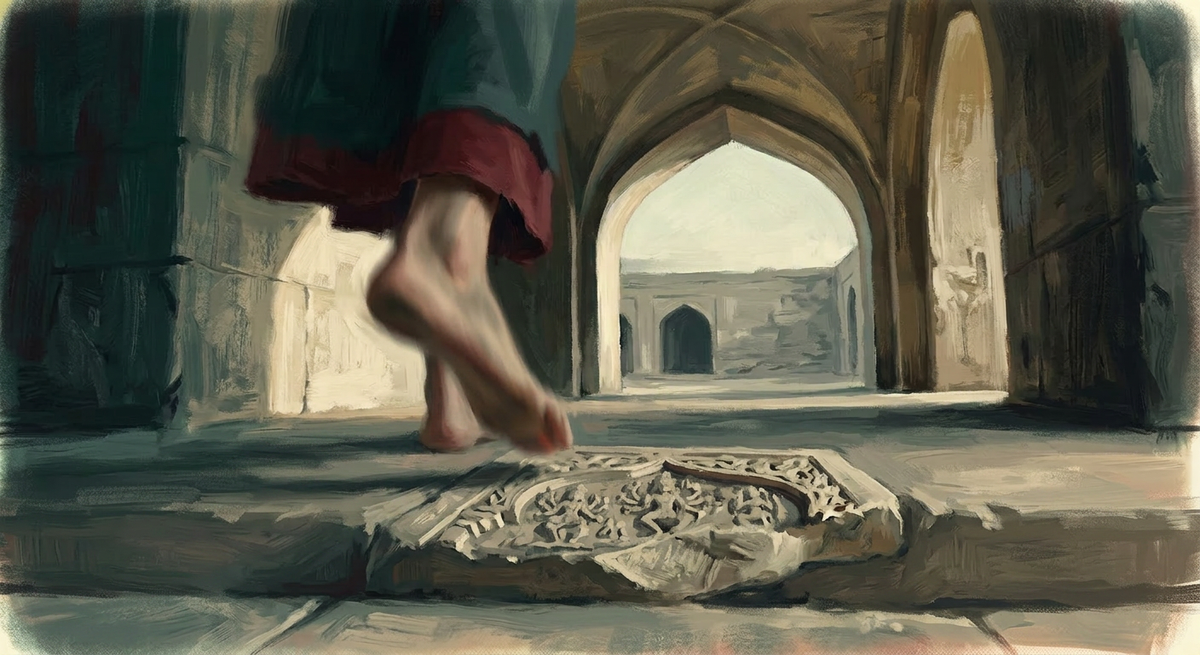
In 1026 CE, Mahmud of Ghazni sacked the Somnath temple and broke the Jyotirlinga into pieces. What he did with those pieces was not incidental. According to Al-Beruni, the scholar who documented the campaign, one fragment was placed before the entrance of the Jama Masjid in Ghazni so that people would rub their feet on it to clean them of dirt as they entered the mosque. Another was laid at the threshold of the Sultan's palace. The act was deliberate. The sacred was placed underfoot, literally, as an instrument of humiliation. It was iconoclasm not just as destruction but as a statement about whose culture counted and whose did not.
That practice did not survive into the modern world in the same form. What survived was the underlying assumption: that Hindu sacred culture is available for others to use as they see fit, that its names and symbols can be picked up, repurposed, and placed wherever is convenient. The mechanism changed. Temples became product catalogues. Sacred images became merchandise. The Jyotirlinga placed beneath the feet of mosque-goers became Bhagwan Shiva's name printed on a mat placed beneath the feet of toilet-users. The intention in ALDI's case was almost certainly not the same. But the effect, of treating a sacred name as something that can be casually assigned to a product that sits on a bathroom floor, carries the echo of it.
The Hindu community carries that history. It is trans-generational in the way all cultural trauma is, not always spoken, but present and easily reopened. So the anger people feel when they see Bhagwan Shiva's name on a toilet mat is not disproportionate. It is entirely proportionate to what the act, however unintentionally, represents.
But anger expressed only as outrage, as a social media post, a comment, a share, tends to generate heat and then dissipate. The product may or may not be quietly removed. No apology is issued. No process changes. The next retailer makes the same mistake in eighteen months.
Advocacy is different because it is specific. It names what is wrong, identifies who is responsible, makes a concrete ask, and stays in the conversation past the initial confrontation.
Here is what that looked like in practice.
What I Did
- Document everything before anything disappears. Screenshots of the product listings, dropdown menus, SKU names, sale date. If a retailer removes a product quietly and you have no record, you have no evidence and no leverage.
- Research the precedents. I wanted ALDI to understand this was not an isolated community complaint but a documented, recurring problem with a clear track record of resolution. The precedents also defined what a reasonable outcome looked like: product removal, public acknowledgement, and a commitment to process change.
- Write a formal complaint with specific, differentiated demands. Not all products deserved the same response. The runners and bath mats were unobjectionable as objects. The offence was in the naming. Rename them with neutral descriptors and the problem is resolved. The contour mat was different: no renaming fixes a product already publicly catalogued under Bhagwan Shiva's name. That product needed to go. I also asked for something structural: a cultural sensitivity training programme for the buying, catalogue, marketing, and supplier management staff responsible for approving product names and images. This is the ask most complainants omit. It is also the most important, because it addresses the cause rather than the symptom. I set a deadline of five business days and stated clearly that I had documentation and was prepared to share it with community organisations and media if a satisfactory response was not forthcoming.
- Give the retailer the opportunity to act before going public. Outrage typically goes public first. Advocacy gives the other party the chance to correct the problem before reputational consequences arrive. This is strategic, not generous: a retailer who acts voluntarily and promptly is more likely to mean what they say about process review. It also keeps the moral high ground clearly on your side.
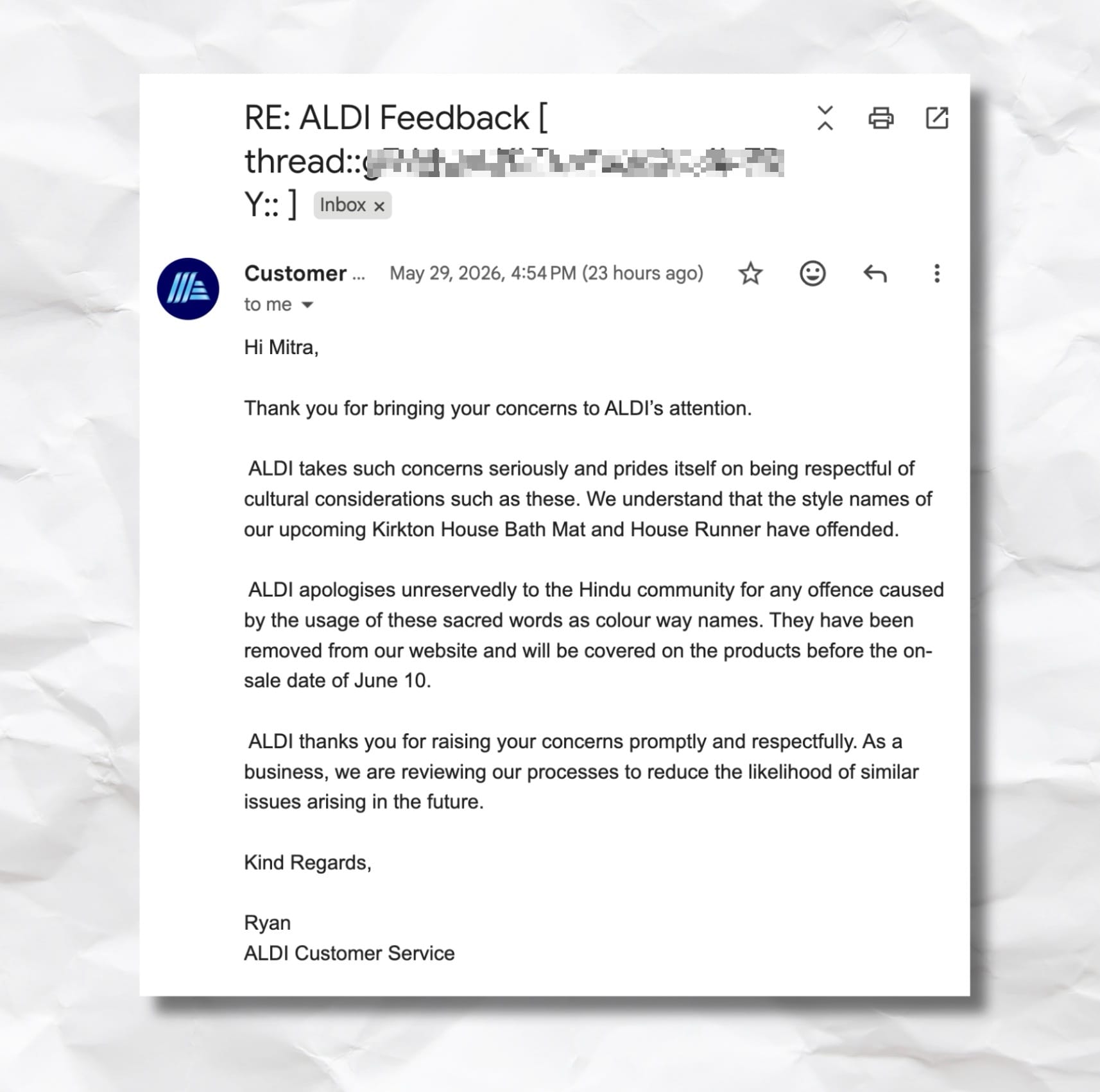
- Acknowledge a good response when you get one. ALDI responded promptly. Their customer service representative, issued an unreserved apology to the Hindu community, confirmed the products had been removed from the website, and committed to covering the names on the products before the 10 June sale date. They also stated they were reviewing their processes. That is a good response. It deserved to be acknowledged as such.
- Stay in the conversation. A good immediate response does not close the matter. I wrote back to note that the cultural sensitivity training request from my original complaint remained outstanding, and to ask how their process review would address it for the longer term. I offered my availability to facilitate the right conversations with community organisations if their team needed direction. The goal is not to claim a win and walk away. The goal is structural change.
What the Outcome Was
The products were removed from ALDI's website.
An unreserved apology was issued.
A process review was committed to.
A follow-up conversation about cultural sensitivity training is underway.
This was not the work of one person. The Sattvik Council of Australia's public post, the nine organisations it tagged, community members identifying individual product variants in comments, and Andrew Charlton MP issuing a public media release all contributed to the pressure that produced that outcome. What happened was a community response, and the outcome reflects that.
This is not a complete outcome. Whether ALDI's process review results in anything substantive, whether someone in their procurement team is actually equipped to recognise a deity's name before it enters a catalogue, remains to be seen. Advocacy plants a flag and holds a standard. Institutional follow-through is the part that takes longer to verify.
But it is a better outcome than outrage alone would have produced. And it created a record: documented complaints, a documented response, a documented commitment, and a public statement from an elected representative. That record matters if the issue recurs.
What You Can Do
If you encounter a product that uses Hindu sacred names or imagery inappropriately, here is the pathway that this experience and others like it suggest.
- Document immediately: screenshots and URLs.
- Research whether similar incidents have occurred with other retailers. Precedent strengthens your complaint.
- Write a formal letter to the retailer's customer relations team. Name the product specifically, explain why the naming is offensive, make numbered concrete demands, set a deadline, and state clearly that you will escalate if needed.
- Distinguish between products that can be remedied by renaming and those that cannot. Make differentiated demands.
- Ask for structural change, not just product removal. Cultural sensitivity training for procurement and catalogue staff is the ask most people leave out.
- Give the retailer the opportunity to act before you go public.
- If they respond well, say so publicly. If they do not, escalate to community organisations, advocacy bodies, and media.
There are several community organisations and individuals active in this space who have a long track record of engaging retailers on these issues and securing positive outcomes.
The Hindu community in Australia is growing and visible. It has every right to expect the same basic cultural respect that businesses extend to everyone else. We do not need to shout to be heard. We need to be precise, persistent, and prepared to stay in the room after the noise has died down.
Advocacy is less satisfying than outrage in the moment. It is considerably more effective over time.
References
Historical sources: Somnath and iconoclasm
- Al-Beruni. Kitab fi tahqiq ma li'l-hind (Alberuni's India), translated by E.C. Sachau. London: Kegan Paul, Trench, Trübner, 1910. (No direct link provided; print/archival source. The relevant reference is in Vol. II.)
- Wikipedia. Sack of Somnath.
https://en.wikipedia.org/wiki/Sack_of_Somnath - OpIndia. (2022, May). Shivling at Wuzukhana in Gyanvapi: How Somnath temple idol was broken into four pieces and buried at four different places.
https://www.opindia.com/2022/05/somnath-temple-idol-broken-into-four-pieces-and-buried-inside-jama-masjid-ghazni-palace-entrance-mecca-and-medina/ - Organiser. (2025, February 13). Millennium-old remnants of Somnath Jyotirlinga to be restored 1,000 years after Mahmud of Ghazni's destruction.
https://organiser.org/2025/02/13/277883/bharat/millennium-old-remnants-of-somnath-jyotirlinga-to-be-restored-1000-years-after-mahmud-of-ghaznis-destruction/ - American Bazaar Online. (2019, May 16). Petition launched against Amazon for selling toilet mats depicting Hindu Gods.
https://americanbazaaronline.com/2019/05/16/petition-launched-against-amazon-for-selling-toilet-mats-depicting-hindu-gods-437557/ - Al Jazeera. (2020, November 10). Amazon yanks doormats with Hindu gods from site amid outrage.
https://www.aljazeera.com/economy/2020/11/10/amazon-delists-briefs-doormats-with-sacred-hindu-symbols - RT. (2019). Amazon won't stop selling 'offensive' toilet rugs with Hindu gods despite mass backlash from Indians.
https://www.rt.com/news/459509-hindu-toilet-covers-amazon/ - Eshadoot. (2018, August 30). Minnesota firm markets Lord Shiva doormat.
https://eshadoot.com/2018/08/30/minnesota-firm-markets-lord-shiva-doormat/ - Hindu Janajagruti Samiti. Converse Inc. withdraw shoes having pictures of Hindu deities.
https://www.hindujagruti.org/news/10257.html - The Gilmer Mirror. (2025, November 25). After Hindu protest, global online retailer Shein removed Lord Ganesh blanket and doormat.
https://www.gilmermirror.com/2025/11/25/after-hindu-protest-global-online-retailer-shein-removed-lord-ganesh-doormat/ - HinduPad. After Hindu protest, Queensland yoga mat firm removes Lord Ganesha mat and says sorry.
https://hindupad.com/after-hindu-protest-queensland-yoga-mat-firm-removes-lord-ganesha-mat-says-sorry/ - Organiser. (2025, August 16). AliExpress, Walmart, Amazon accused of insulting Hindu faith.
https://organiser.org/2025/08/16/306566/bharat/commercial-blasphemy-know-how-the-global-e-commerce-giants-mock-disrespect-hindu-gods-sell-offensive-products/ - Change.org. Petition: Walmart: Stop using Hindu god's name 'Brahma' on shoes.
https://www.change.org/p/walmart-walmart-stop-using-hindu-god-s-name-brahma-on-shoes - SBS News. Aldi pulls 'racist' T-shirts.
https://www.sbs.com.au/news/article/aldi-pulls-racist-t-shirts/11rhz842o - The Drum. (2014, January 8). Aldi pulls 'racist' Australia Day T-shirt after social media backlash.
https://www.thedrum.com/news/2014/01/08/aldi-pulls-racist-australia-day-t-shirt-after-social-media-backlash - Middle East Forum. Aldi withdraws soap brand 'insulting to Muslims'.
https://www.meforum.org/islamist-watch/aldi-withdraws-soap-brand-insulting-to-muslims - The Grocer. Aldi apologises after selling halal-labelled black pudding containing pork.
https://www.thegrocer.co.uk/news/aldi-apologises-after-selling-halal-labelled-black-pudding-containing-pork/518728.article - Rajan Zed. Amazon removes Lord Hanuman underwear within a day of Hindu protest.
https://www.rajanzed.com/amazon-removes-lord-hanuman-underwear-within-a-day-of-hindu-protest/ - London School of Economics: Religion and Global Society. (2017, September). Cultural appropriation: Analysing the use of Hindu symbols within consumerism.
https://blogs.lse.ac.uk/religionglobalsociety/2017/09/cultural-appropriation-analysing-the-use-of-hindu-symbols-within-consumerism/ - Sattvik Council of Australia. (2026, May 27). Facebook page.
https://www.facebook.com/SattvikCouncilofAustralia - Desi Australia. (2026). ALDI removes products following Hindu community concerns, raising broader questions around cultural awareness.
https://desiaustralia.com/lifestyle/mag-corner/aldi-removes-products-following-hindu-community-concerns-raising-broader-questions-around-cultural-awareness/
Mitra Desai is a researcher, author, and storyteller based in Australia. She writes about India's living history, its contested present, and the questions that mainstream accounts leave unanswered. Subscribe to Tejomaya Bharat at tejomayabharat.com.



Comments ()